


NEWYou can now listen to Fox News articles!
Researchers recently recovered 42 lost pages from Codex H, one of the world’s most important early New Testament manuscripts.
Codex H, short for Codex Hierosolymitanus, is a palimpsest — meaning parts of the manuscript were reused and rewritten over the centuries.
Researchers were tipped off after discovering the manuscript had been re-inked, leaving faint mirror-image traces of the original text.
RARE MEDIEVAL BIBLE RETURNS TO ISRAEL FOR PUBLIC EXHIBIT AFTER CENTURIES-LONG JOURNEY
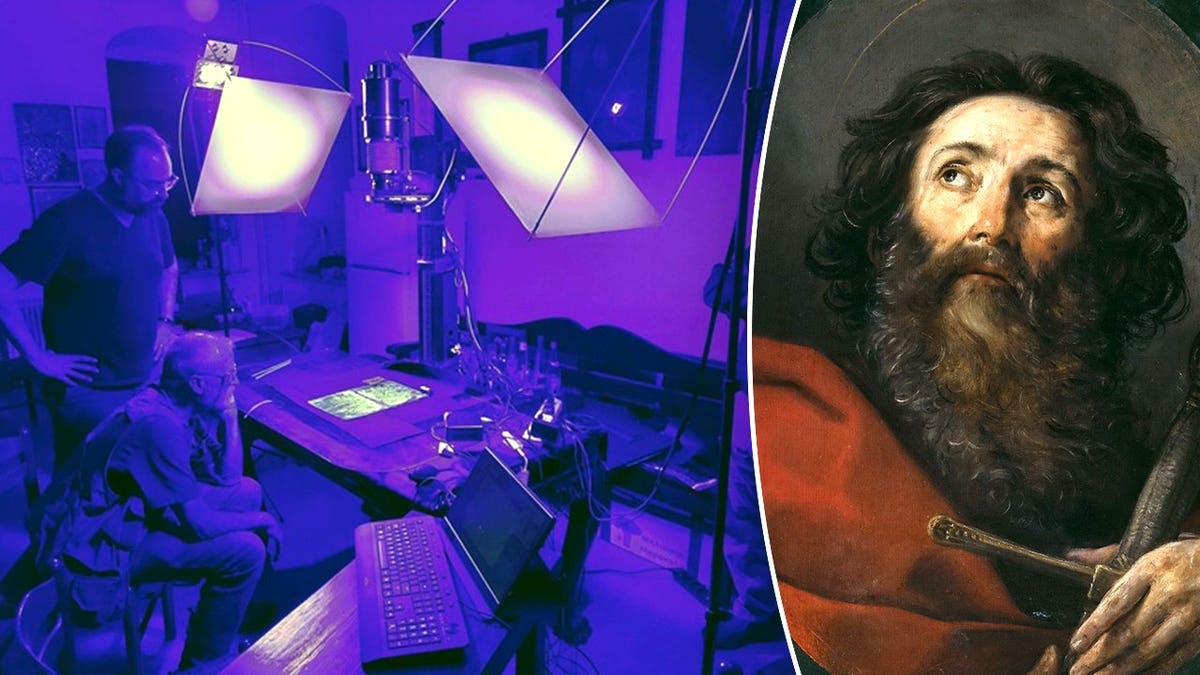
Then they used modern technology, including multispectral imaging, to recover “ghost” text that isn’t visible to the human eye.
The discovery was announced by the University of Glasgow in an April 24 press release.
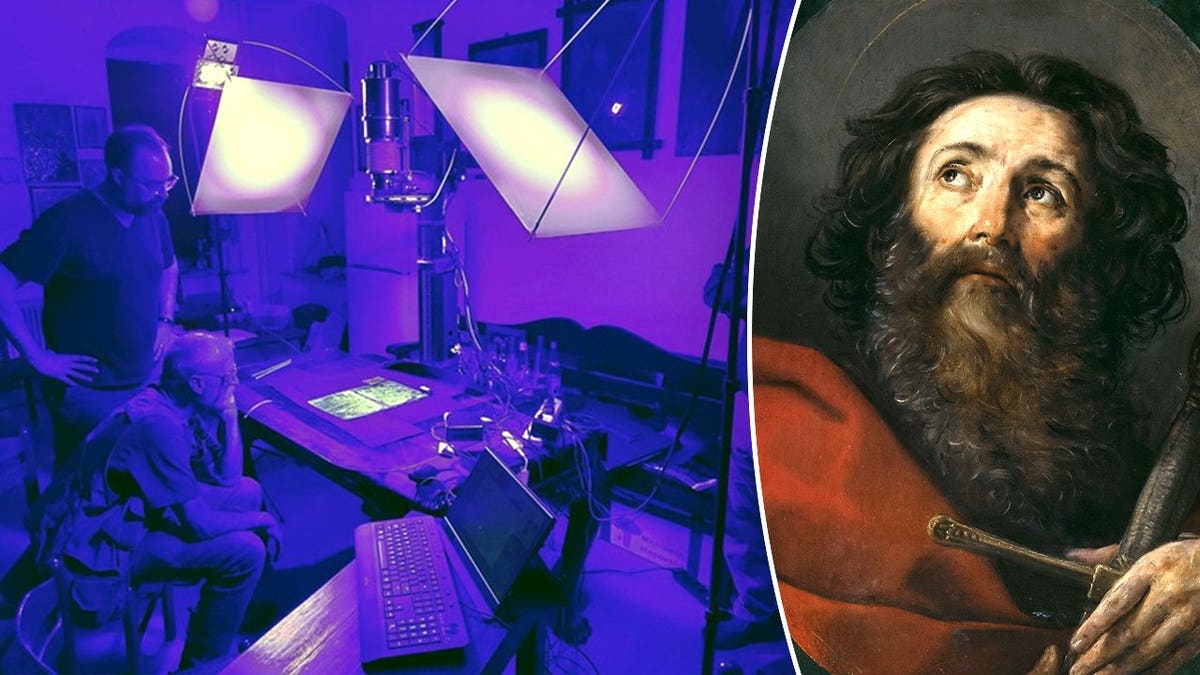
Researchers have recovered 42 previously lost pages from Codex H, an early New Testament manuscript that contains a copy of the Letters of St. Paul. (Damianos Kasotakis; Fine Art Images/Heritage Images via Getty Images)
“The fragments show how 6th-century scribes corrected, annotated and interacted with sacred texts,” the university noted in its release, with the physical state of the manuscript revealing “how sacred works were reused and repurposed once they fell into disrepair.”
The text, which does not contain any new scripture, dates back to the sixth century and is a copy of the Letters of St. Paul.
It was disassembled in the 13th century at the Megisti Lavra monastery on Mount Athos, Greece.
‘UNEXPECTED’ ROMAN-ERA DISCOVERIES UNEARTHED IN BIBLICAL CITY MENTIONED IN BOOK OF REVELATION
Since then, its pages have been scattered across libraries in Europe, with only fragments of the original manuscript surviving, including some held by the University of Glasgow.
It was within these fragments that a team of researchers identified the lost pages, including ancient chapter lists, which “differ drastically from how we divide these letters today,” the university said.
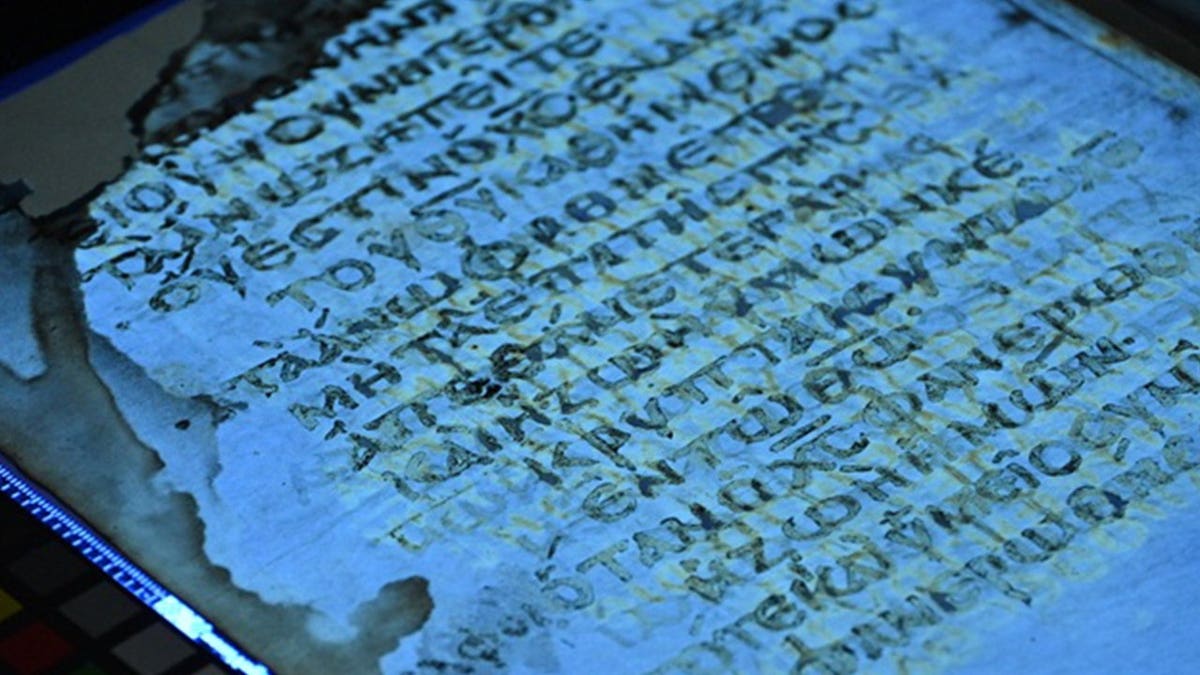
The text was originally disassembled in the 13th century at a monastery on Mount Athos in Greece. (Damianos Kasotakis)
Codex H’s significance stems in part from its rarity, said Garrick Allen, a University of Glasgow professor who led the project.
“It’s an important witness to the text of Paul’s Letters in a period where we don’t have that many manuscripts,” the professor told Fox News Digital, referring to the sixth to ninth centuries.
ANCIENT CHRISTIAN MONASTERY COMPLEX REVEALS LIVES OF BYZANTINE MONKS BEFORE ARAB CONQUEST
The practice of marking up biblical texts dates back centuries, much as readers still do today — and Codex H preserves over 1,000 years of annotations.
“Manuscripts of the New Testament and other literature were often annotated and marked up by scribes and readers,” Allen noted.
“We have recovered [these pages] due to the unintended results of a medieval conservationist.”
Codex H, for example, includes “over 70 corrections to the text itself by a scribe who compared its text against another manuscript,” the professor said.
The manuscript also contains “many annotations by at least 15 later readers who left their marks through prayers, poems, grammatical notes and other information.”
CLICK HERE TO SIGN UP FOR OUR LIFESTYLE NEWSLETTER
“These types of notes are not unusual but, because Codex H had such a long life in many forms, its pages attracted many interested readers — and these annotations are often the only tangible evidence left that these anonymous people existed,” said Allen.
As for why the manuscript was disassembled, Allen suggested it likely “reached the end of its working life.”
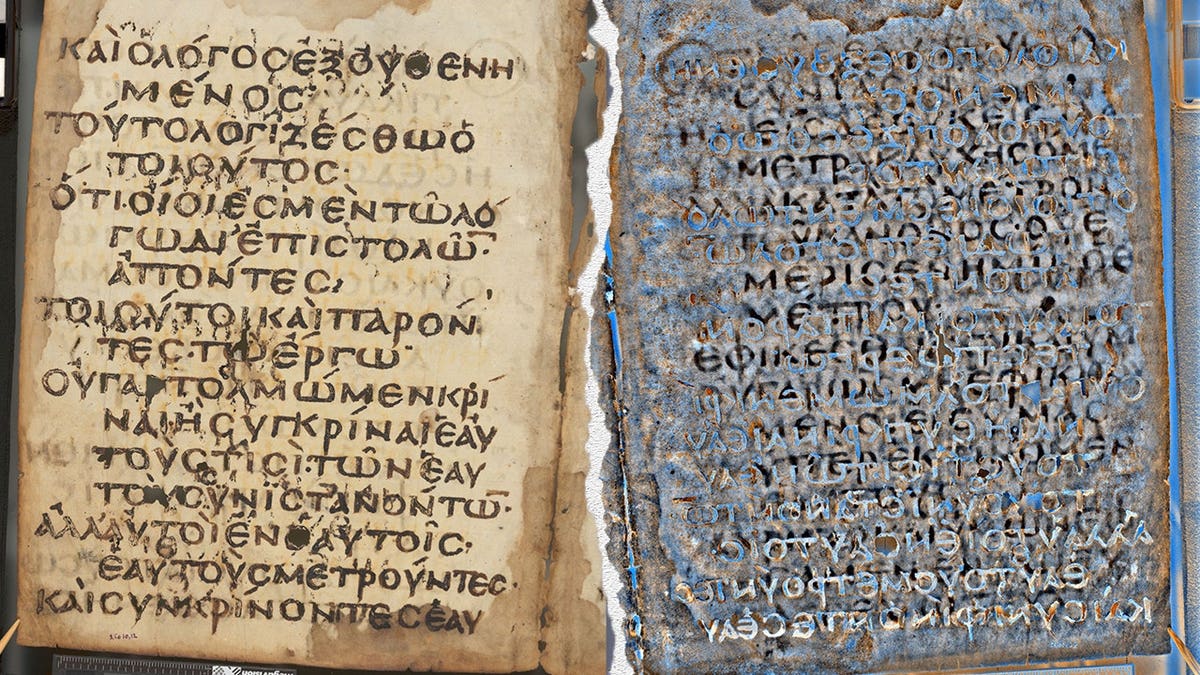
The recovered pages from Codex H offer new insight into how the Letters of St. Paul were copied and studied. (Early Manuscripts Electronic Library, Monastery of Great Lavra)
“Six hundred to 700 years is a long time for a book to be kept in working order, even though we know that at least one person attempted to conserve it during this period through re-copying,” he said.
“In a remote location like Mount Athos in a period where parchment was very expensive to produce, it makes sense that the monastery reused this manuscript to keep up other books in their library.”
CLICK HERE FOR MORE LIFESTYLE STORIES
Ironically, breaking the manuscript apart helped preserve it, Allen noted — its pages were reused inside other books and eventually spread across European collections.
“The book was re-inked in its entirety at some point in its working life, meaning that someone rewrote over the existing text … in an attempt to keep the book usable for a new generation,” said Allen.
“This process makes me optimistic that many ancient manuscripts still have much more to tell us about the people who made and used them.”
“Eventually, the book was disbound and reused as binding material and flyleaves when librarians at the Megisti Lavra monastery on Mount Athos repaired other books in their collection. It’s this repurposing of this ancient book that led to its continued existence.”
The most surprising part of the discovery, Allen said, was the sense of awe in reading biblical texts that “no longer exist.”
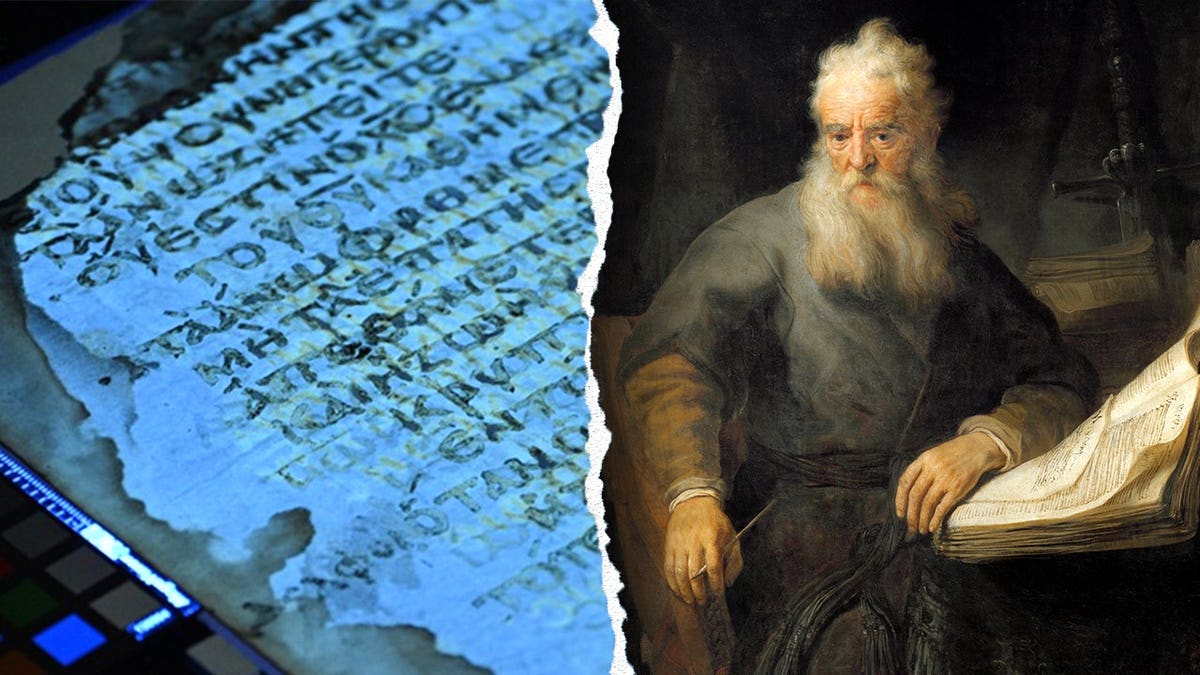
The discovery reveals new details about how early Christian scribes copied and corrected the Letters of St. Paul. (Damianos Kasotakis; Leemage/Corbis via Getty Images)
“We have recovered [these pages] only due to the unintended results of a medieval conservationist,” the expert said.
“This process makes me optimistic that many ancient manuscripts still have much more to tell us about the people who made and used them.”
That progress is being driven in part by advances in imaging technology, Allen added.
TEST YOURSELF WITH OUR LATEST LIFESTYLE QUIZ
“Although each manuscript is by definition unique and presents its own challenges, we think that we’ve developed a model for working with challenging manuscripts like palimpsests at a larger scale,” he said.
CLICK HERE TO DOWNLOAD THE FOX NEWS APP
“When manuscript and biblical scholars work closely with imaging specialists, data scientists, monastic communities, museums, and other local partners, we can really make progress in our understanding of these important documents.”


